

Master Mandatory E-Invoicing — Without Expensive Add-On Modules
What SMEs need to know about ZUGFeRD and XRechnung, and how our ERP system ndy.ERP eliminates manual invoice data entry.
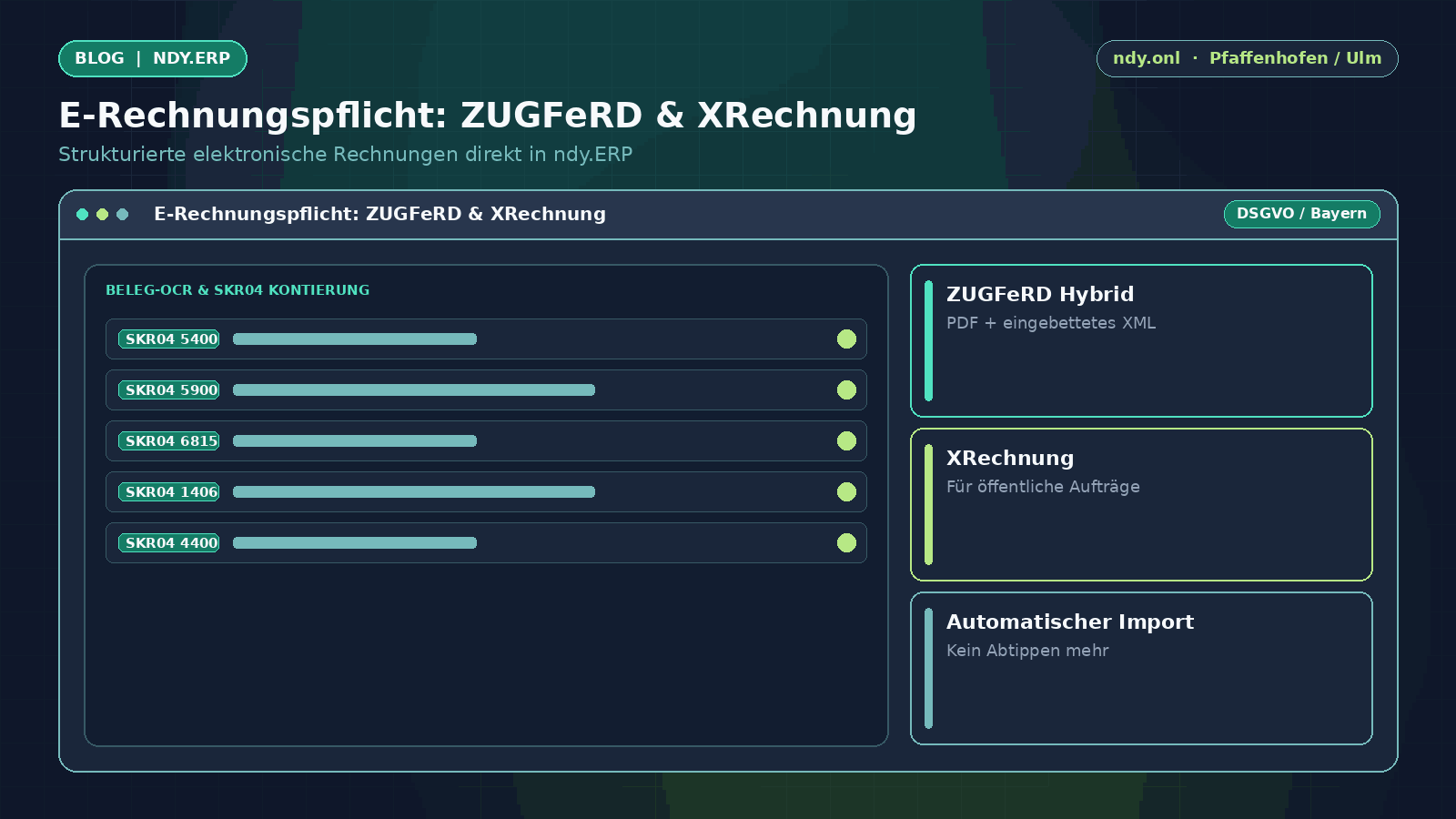
What Does Mandatory B2B E-Invoicing Actually Mean?
Why a Standard PDF Is No Longer an E-Invoice
Many businesses already send invoices as PDF email attachments. Under German and European B2B e-invoicing standards (EN 16931), however, a true e-invoice must contain structured, machine-readable XML data so accounting systems can import every line item automatically without manual typing.
The Two Key Formats Explained Simply
- ZUGFeRD (The Hybrid Standard for SMEs): Looks like a regular visual PDF invoice to humans, while embedding the complete machine-readable XML file inside the PDF. Ideal for trades, service providers, and commerce.
- XRechnung (For Public-Sector Contracts): A pure XML data file required when billing federal, state, or municipal authorities.
Turning a Legal Requirement Into Time Saved Every Week
Instead of paying for a separate e-invoicing subscription, full support is built right into ndy.ERP (powered by ERPNext):
- Automated Inbound Parsing: Incoming ZUGFeRD and XRechnung files are read with zero transcription errors — supplier, line items, tax rates, and IBAN are populated immediately.
- One-Click Outbound Generation: Every outgoing invoice is generated as a compliant ZUGFeRD hybrid PDF or XRechnung.
- GoBD-Compliant Archiving: All original invoice files remain securely stored on your own Bavarian infrastructure.